Where our data comes from
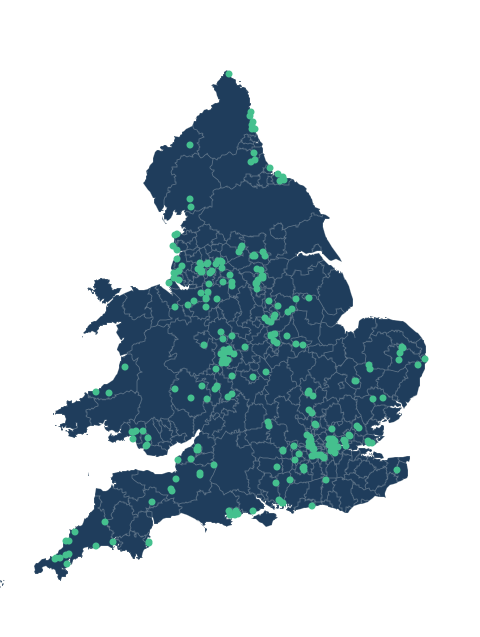
LicenceMap brings public licensing and venue information in England and Wales onto one map. Its core is the premises licence notices councils must publish online for at least 28 days, so that residents, businesses and the police can comment before a decision is made. Around them we add planning applications, food registrations and new companies, each from its own public register, listed below.
How we read licence notices
The rule is in the Licensing Act 2003 and its regulations. LicenceMap checks those public notices on council websites twice a day and puts them on one map. Every application links back to the council's own notice, which is always the official version.
What we show for each licence notice
- Premises name and address
- Type of application: a new licence, a change to an existing licence (a variation), or another type such as a transfer or review
- What was applied for, in the council's own words
- The date comments close. A few councils publish only the date they received an application; there we show that date plus the 28 days the law allows for comments, marked as estimated
- Which council published it, and when we first saw it
We don't show the names of individual applicants.
Every source and its licence
Licence notices are the core. Around them we add what other public registers say about the same premises. Each is credited wherever its data appears, and none of them endorses LicenceMap.
| Source | What we take | What we show | What we leave out | Licence |
|---|---|---|---|---|
| Local councils | Public notices of licence applications: premises licences, gambling premises, pavement licences, sex establishments, and planning registers. | The premises, what was applied for, the dates, the applicant when it is a company, and a link to the council's notice. | The names of individual applicants. | Credited by name, with a link to each notice |
| Food Standards Agency | Food hygiene ratings of hospitality and retail food businesses. | The rating, its date and a link to the agency's record, beside the notice for the same premises. | None | Open Government Licence v3.0 |
| Companies House | The register of companies. | Company number, status, type, incorporation date, SIC codes and registered office. | Officers, people with significant control and care-of names. | Open Government Licence v3.0 |
| The Gazette | Company insolvency notices. | The company, the kind of notice, its date and a link to it. | Partnership and personal insolvency, and the insolvency practitioner. | Open Government Licence v3.0 |
| HM Passport Office | The list of premises approved for marriages and civil partnerships. | The venue's name, address and approval. | Telephone numbers. | Open Government Licence v3.0 |
| Planning Inspectorate | Decided planning appeals about commercial use. | The site, what was appealed, the decision and its date, and the appellant when it is a company. | Householder and dwelling appeals, the inspector, and appellants who are individuals. | Open Government Licence v3.0 |
Contains public sector information licensed under the Open Government Licence v3.0.
How up to date it is
We check each council's notices twice a day. The Coverage page shows every council we cover and when we last updated it successfully. If a council changes its website and our check fails, the Coverage page marks that council as 'Check failing' while we fix it. Until then you'll see the applications we last collected, so check the council's own notice for anything newer. A council whose website turns our servers away shows as 'Not readable yet' until it lets us in.
What we don't cover yet
We read councils across England and Wales, and the list keeps growing. Some councils don't publish a list online, and some ask automated tools not to visit their sites; we respect that and ask them for permission instead. If your area isn't covered, tell us from the map and we'll let you know when it is.
When a venue is likely to open
Each venue's stage is read from its own timeline: planning, a licence applied for, a licence granted, a food business registered, trading. A first food hygiene rating is trading, and so is anything only a trading premises files, such as a variation. The expected opening window comes from our own history: for every venue that reached a stage and later got its first rating, the days between. A council's figures are used where 30 or more of its venues back them, the national figures otherwise. The window runs from the 20th to the 80th centile of those days, and we publish it only when it passes its own test: drawn from the oldest seven in ten venues, at least half of the newest three in ten must have opened inside it. Where nothing backs a stage we say so rather than guess, and every window names how many venues it rests on.
How an area's opening heat is scored
The area scorecard counts what marks a new venue on its way in the last 90 days: a premises licence notice labelled a new venue or a new operator, a food business registering with its council, a hospitality company incorporating at a venue we hold, and a change-of-use planning application. For a council that count is set per 10,000 residents, using the ONS mid-year population estimates, and ranked against every council we cover: the busiest quarter is Very busy, the next Busy, then Steady, and the quietest quarter Quiet. A county is the sum of its councils. A town or a drawn zone has no population of its own, so it is read as a share of the council it sits in and takes that council's band and rank. The month-on-month change compares the last 30 days with the 30 before, and is shown only once three full months of data stand behind it; before that the card says it is early data and names the month we started. Trading patterns are the share of notices in the last year that trade past 11pm, have live music, an outdoor area, or vary an existing licence, against the same share across every council we cover. Every figure is a count of records we read, never a model, and the free line and the full view are worked out from the same records.
Accuracy
We copy what councils publish. If a council's notice contains a mistake, our copy will too. Always check the council's notice before acting, and contact the council's licensing team about any application.
Spotted a problem?
Email hello@licencemap.co.uk. If you're named in an application and want something removed, see our Privacy Notice.